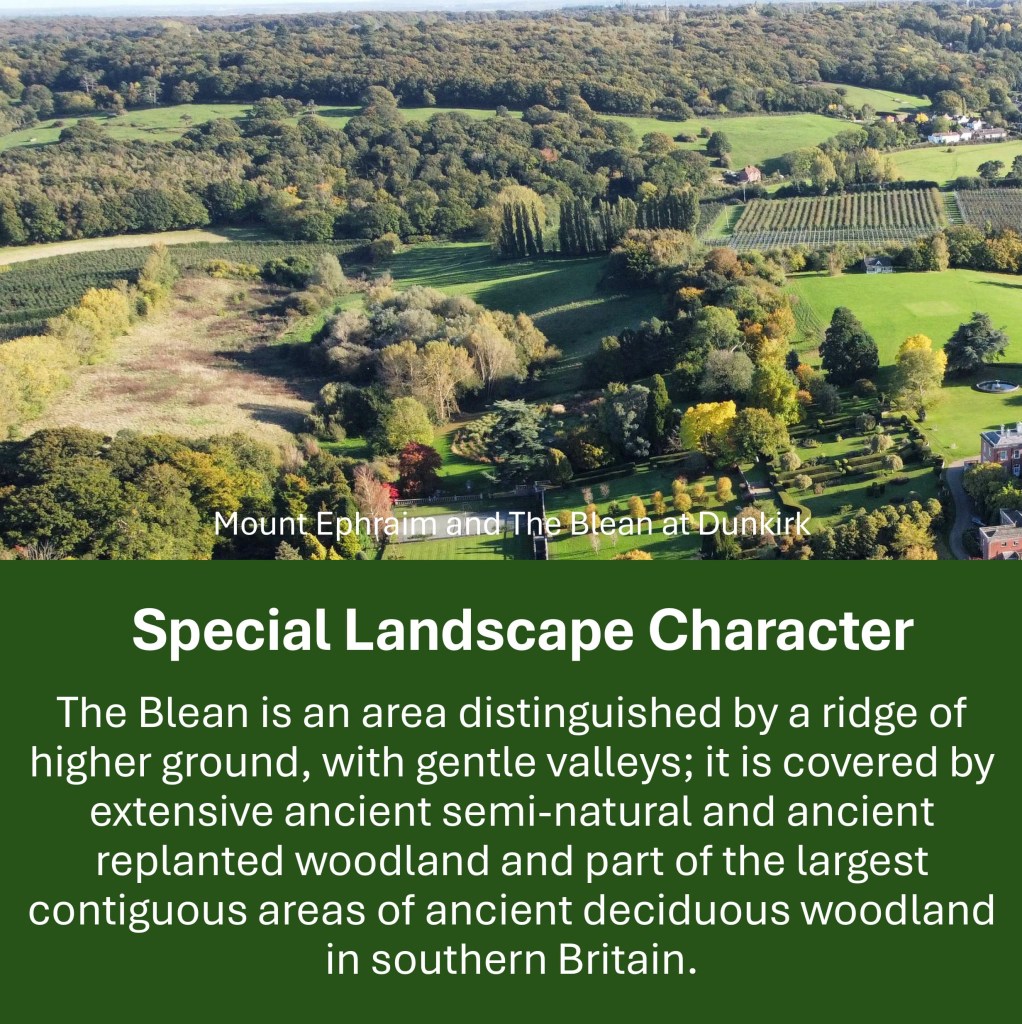
“The Blean is an area distinguished by a ridge of higher ground, with gentle valleys; it is covered by extensive ancient semi-natural and ancient replanted woodland and part of the largest contiguous areas of ancient deciduous woodland in southern Britain, with areas of managed Hornbeam and Chestnut Coppice. The coppice woodlands harbour the few remaining colonies of the rare heath fritillary butterfly along with many at-risk wildlife species.
The woodland is designated internationally, nationally and locally. A strong sense of remoteness prevails, with a high level of tranquillity and good experience of dark skies”.
This description is taken from the @canterburycitycouncil Landscape Character & Biodiversity Appraisal.
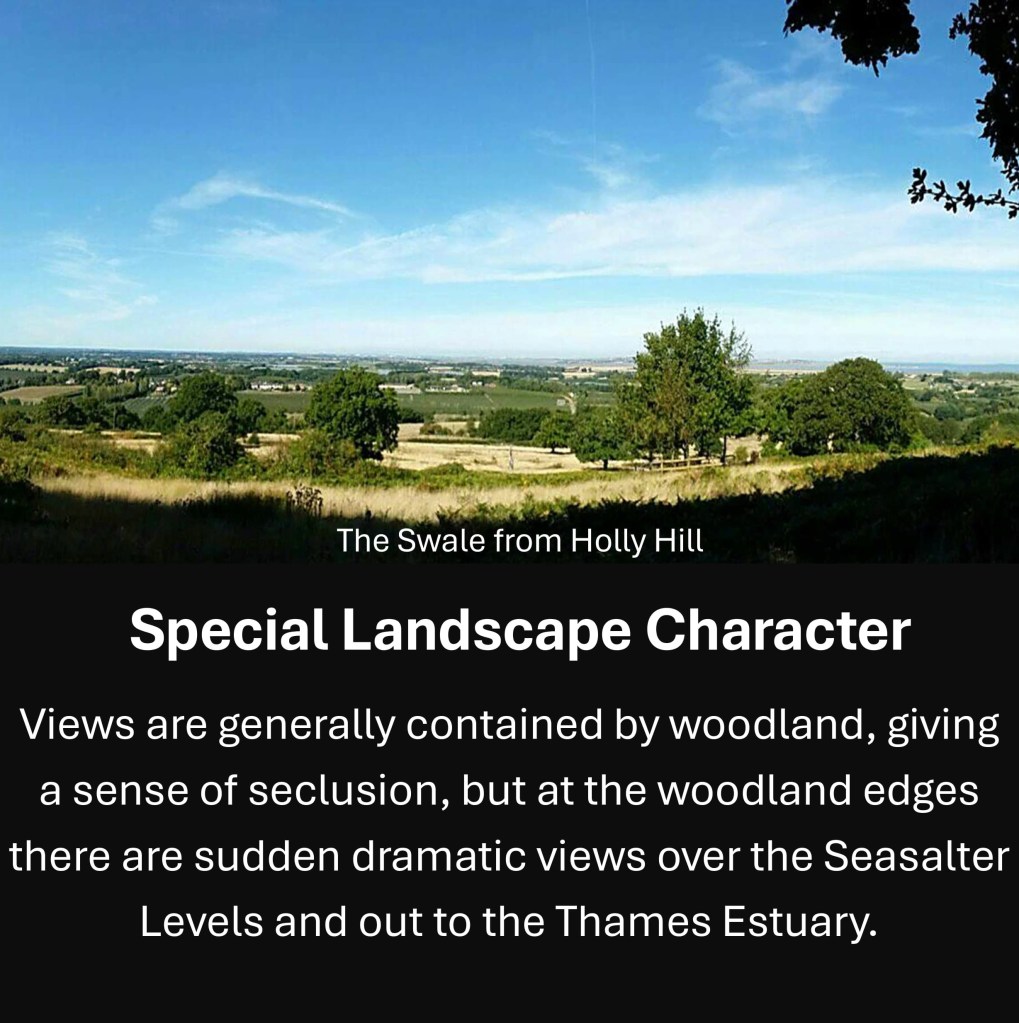
Views are generally contained by woodland, giving a sense of seclusion, but at the woodland edges there are sudden dramatic views over the Seasalter Levels and out to the Thames Estuary. The unusual close proximity of these large woodlands to the sea creates a distinctive sense of place, unique within the context of the Kent landscape.
Outside the woodlands, majestic specimen oaks are commonly seen scattered across the open pastures.
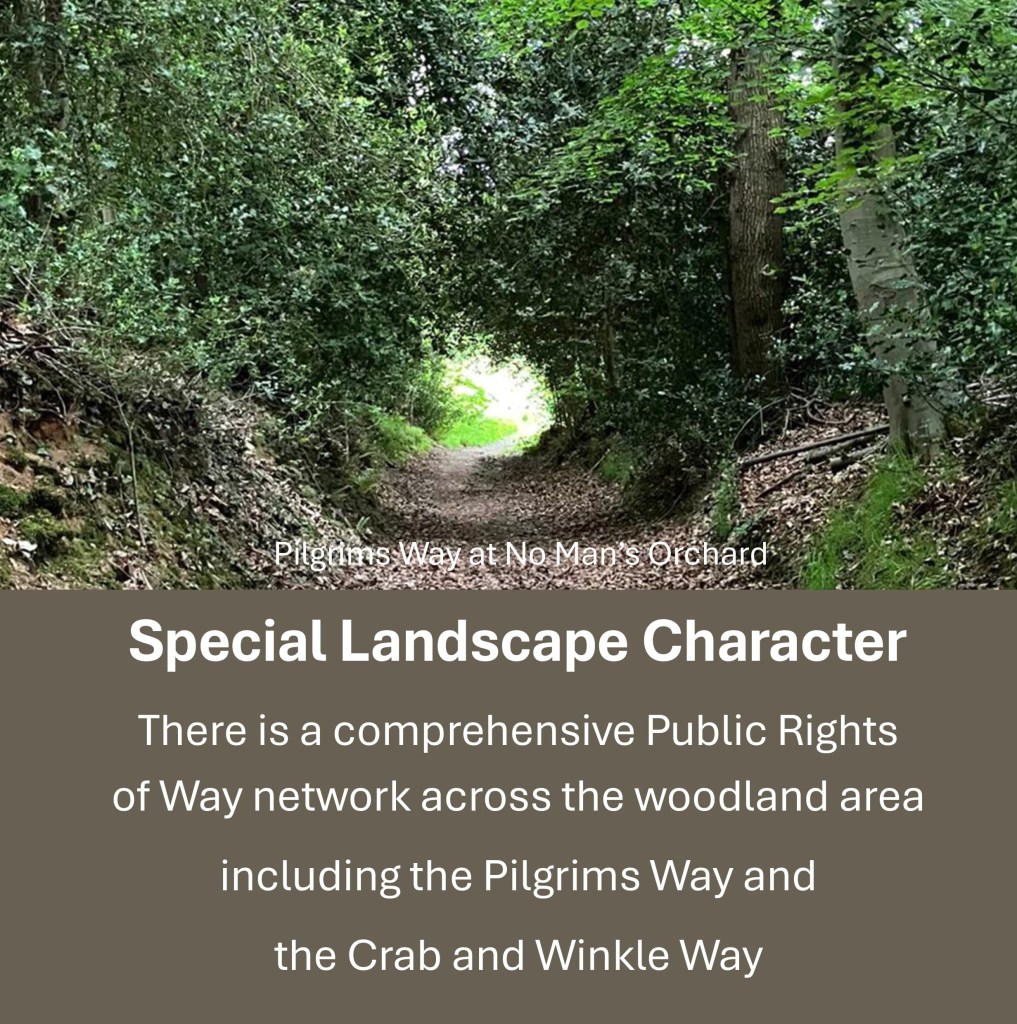
There is an important comprehensive Public Rights of Way network across the woodland area including the Pilgrims Way and the Crab and Winkle Way, which is a major recreational connection between the coast, Blean and Canterbury City.
Research consistently shows that access to nature is essential for both mental and physical health. Our relationship with the natural world plays a powerful role in supporting well‑being. By protecting woodland biodiversity and strengthening connections across the landscape, we can also improve access—creating more opportunities for people to enjoy and benefit from nature in one of the UK’s more densely populated areas.
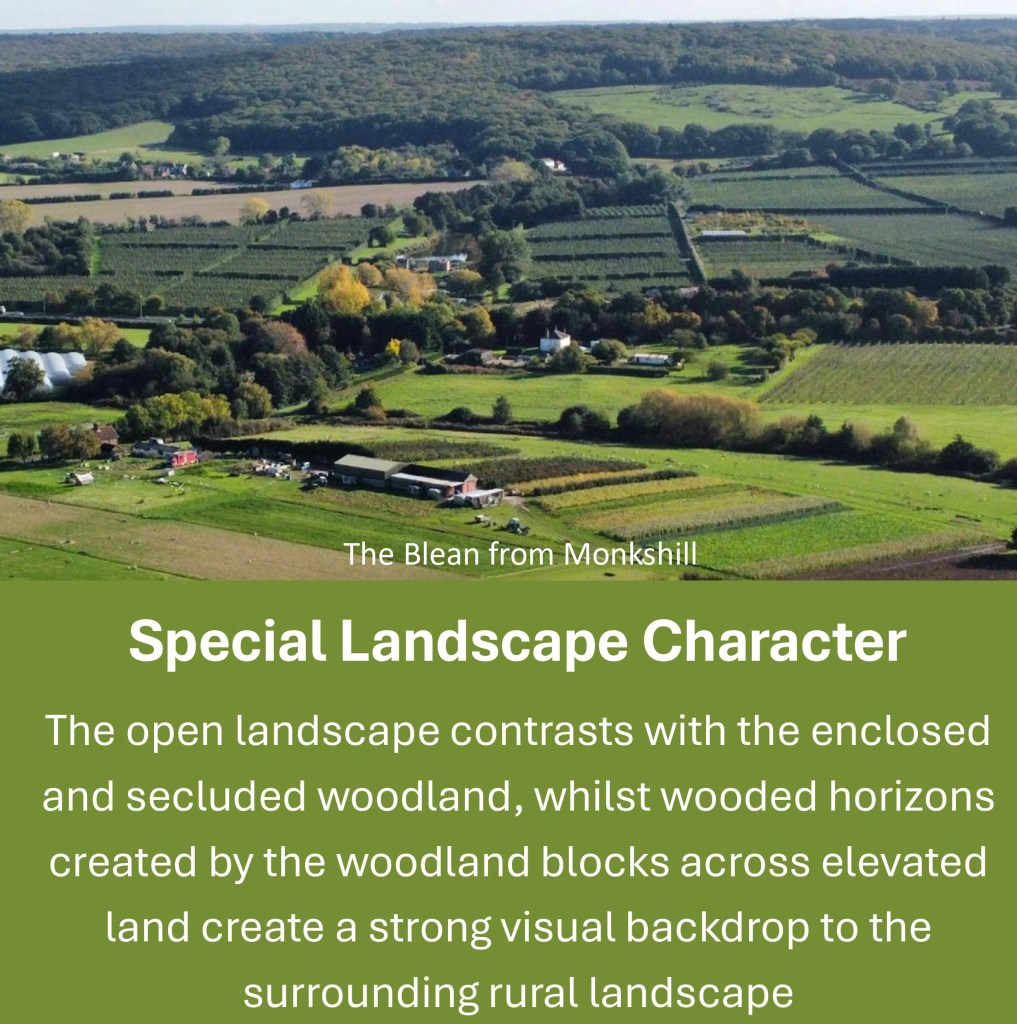
Open areas of grassland and heathland clearings, rides and glades provide important habitats and an open landscape, contrasting with the enclosed and secluded woodland, whilst wooded horizons created by the woodland blocks across elevated land create a strong visual backdrop to the surrounding rural landscape of orchards, arable farmland and grazed pasture. Beyond the wooded areas, the pattern of fields, hedgerows and occasional small woodland is characteristic of the agricultural landscape, with a coherent field pattern including the remnants of Medieval enclosures.
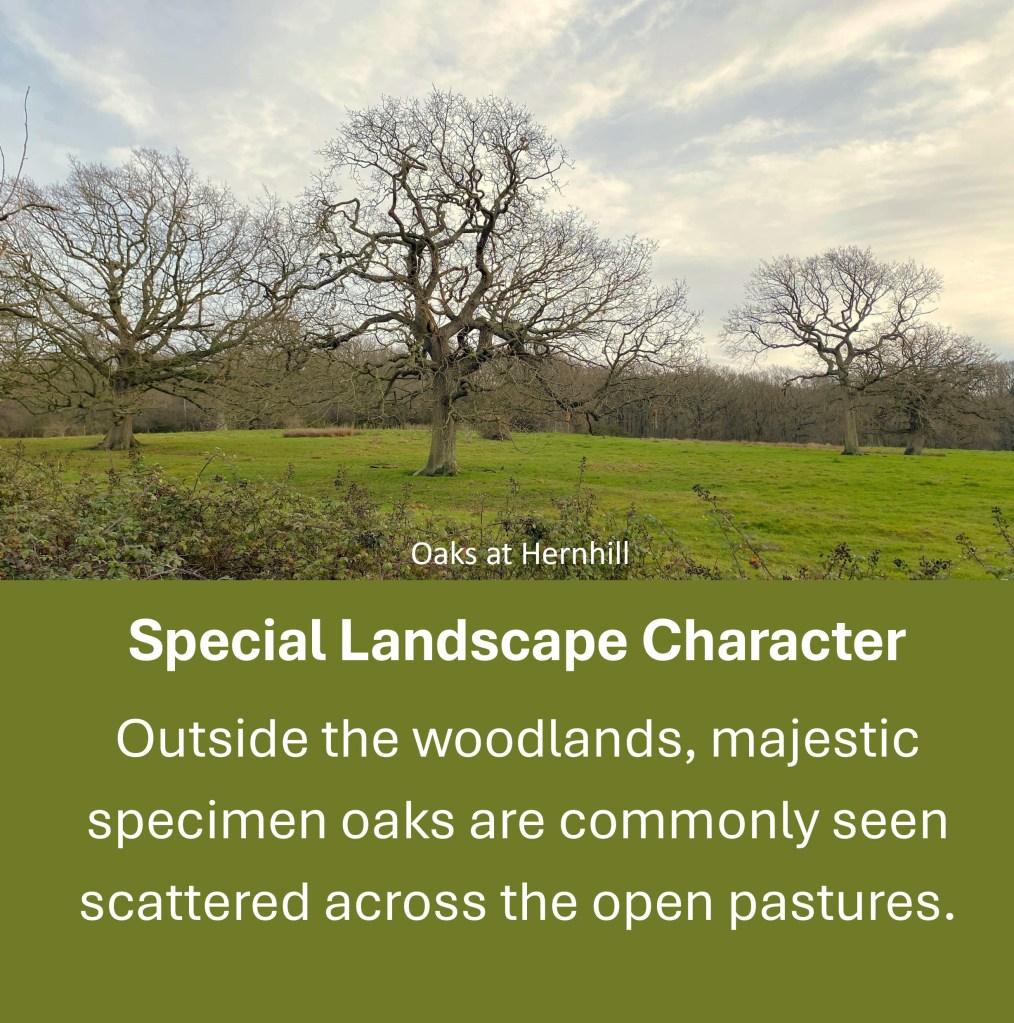
Outside the woodlands, majestic specimen oaks are commonly seen scattered across the open pastures. These are among the most ecologically valuable and historically significant landscapes in Britain. They sit in the transition zone between open grassland and closed-canopy woodland, and it is precisely this in‑between character that gives them their importance.
In the UK, wood pasture and parkland is recognised as a Priority Habitat. These habitats are valued not for dense tree cover, but for their scattered, open‑grown trees—especially ancient and veteran oaks—set within grazed grassland or heath.
Oak pastures at woodland edges often represent the best surviving examples of this habitat type because they retain long continuity of grazing and tree management, unlike many enclosed woods that have lost these features.
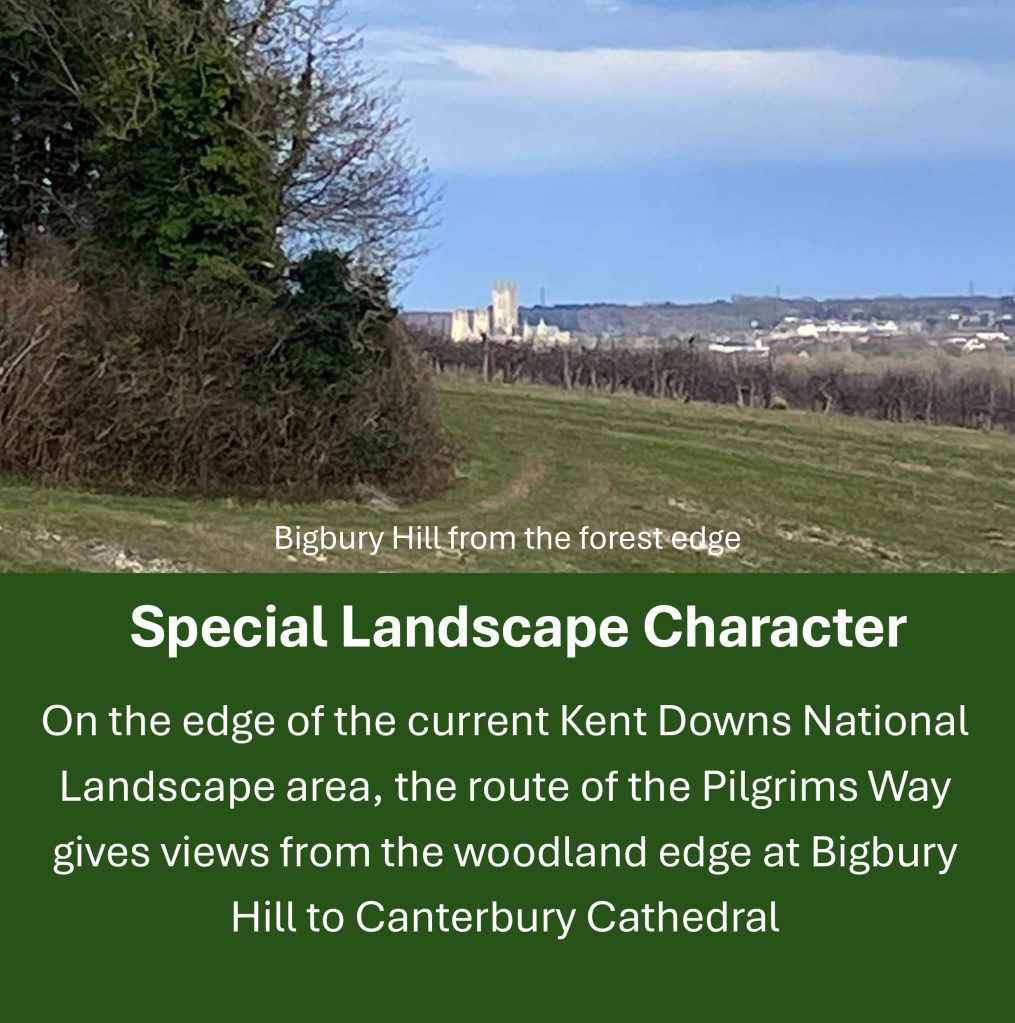
At the edge of the Kent Downs National Landscape, the Pilgrims Way opens out to a remarkable view from the woodland fringe of Bigbury Hill towards Canterbury Cathedral. It is a sight that has stirred pilgrims for centuries, those travelling on foot from London and Winchester towards one of Christianity’s most important destinations.
The high woodland forms a natural backdrop to the city below, drawing the eye towards the Cathedral towers. From here, the route descends into the historic heart of Canterbury, where those towers rise much as they always have, signalling the end of a journey shaped by history, spirituality and quiet beauty.
For generations, the Pilgrims Way has been walked by people seeking faith, reflection, or simply the joy of the landscape. Today, it remains a powerful reminder of the countless stories, footsteps and hopes woven into the path over time.
 Forest Of Kent